A legal challenge, taken by the Children’s Law Centre relating to the Secretary of State’s 2023/24 budget will be heard in Belfast’s High Court on Monday 22 January for a leave hearing.
Speaking ahead of the hearing, and in advance of the next budget setting process, the Centre’s Policy and Public Affairs Manager has warned that a repeat of the 2023/24 so called punishment budget cannot happen again.
Fergal McFerran, Policy and Public Affairs Manager at the Children’s Law Centre, said:
“The impact of the Secretary of State’s punishment budget was plain for everyone to see. The Children’s Law Centre, along with a wide range of other voices, consistently warned about the impact it would have on children and young people, particularly those who are most disadvantaged.
“Ourselves, the wider voluntary and community sector and even the United Nations Committee on the Rights of the Child repeatedly called on the Secretary of State to rethink the 2023/24 budget and protect children from harm. Unfortunately, those concerns were ignored and we were left with no option but to take legal action.
“We are taking this challenge to ensure children and young people are protected from harm when budget decisions are being made. We must ensure the legal process for doing that is followed, regardless of who sets the budget.
“We are now facing the prospect of another grim budget setting process. We want to be as clear as possible – a repeat of the so called punishment budget must never happen again.”
Children’s Law Centre issues pre-action letter to the Secretary of State for Northern Ireland, the Northern Ireland Office and the Department of Finance
The Children’s Law Centre has written to the Secretary of State for Northern Ireland, Chris Heaton-Harris, outlining failures in the budget setting process for the year 2023/24. The letter states that the Secretary of State has failed in his responsibility to apply the principle of equality, including assessing whether the cumulative impact of the budget cuts is disproportionately affecting disadvantaged children, including disabled children.
The Children’s Law Centre had previously written to the Secretary of State, in a letter endorsed by over 200 organisations and leading individuals, stating that his budget will cause active harm to children and young people. The latest correspondence requests that several meaningful steps are taken to address equality and human rights concerns which impact on children. If these steps are not taken, the Children’s Law Centre believes it will regrettably be left with no alternative but to bring legal proceedings.
Fergal McFerran, Policy and Advocacy Manager at the Children’s Law Centre, said:
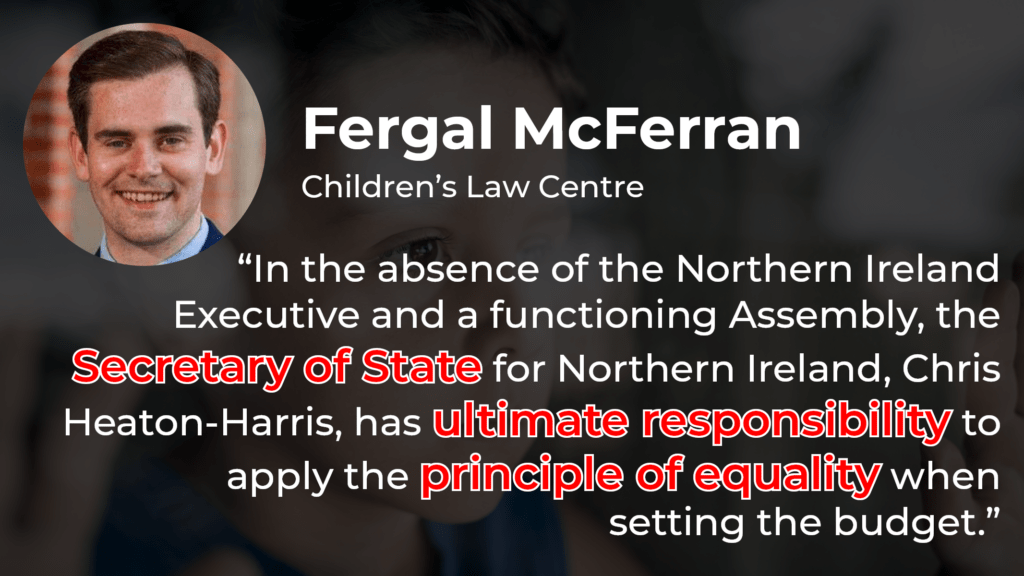
“In the absence of the Northern Ireland Executive and a functioning Assembly, the Secretary of State for Northern Ireland, Chris Heaton-Harris, has ultimate responsibility to apply the principle of equality when setting the budget. This includes assessing the cumulative impact his budget will have on protected groups in our society such as children in need, children with special educational needs and disabilities, and children living in poverty.
“From our engagement with the Secretary of State and the Northern Ireland Office, we see no evidence that Chris Heaton-Harris has carried out his legal obligations. In fact, it is our view that he has utterly failed to do so. We fear the cumulative impact his budget will have on children and young people will be severe, particularly those most disadvantaged. We already see this in our everyday work.
“The Children’s Law Centre, the wider voluntary and community sector and even the United Nations Committee on the Rights of the Child have repeatedly called on the Secretary of State to rethink his budget and protect children from harm. Unfortunately, concerns about the cumulative impact of the budget on the most vulnerable and the Secretary of State’s apparent failure to ensure equality appear to have fallen on deaf ears.
“If the Secretary of State for Northern Ireland fails to take meaningful steps to assess how to protect children from the cumulative effects of the budget cuts, we will be left with no reasonable alternative other than to seek leave to apply to the High Court in Belfast for judicial review. Indeed, as an organisation set up to advance the rights of children, it would regrettably be the only course of action left to us.”
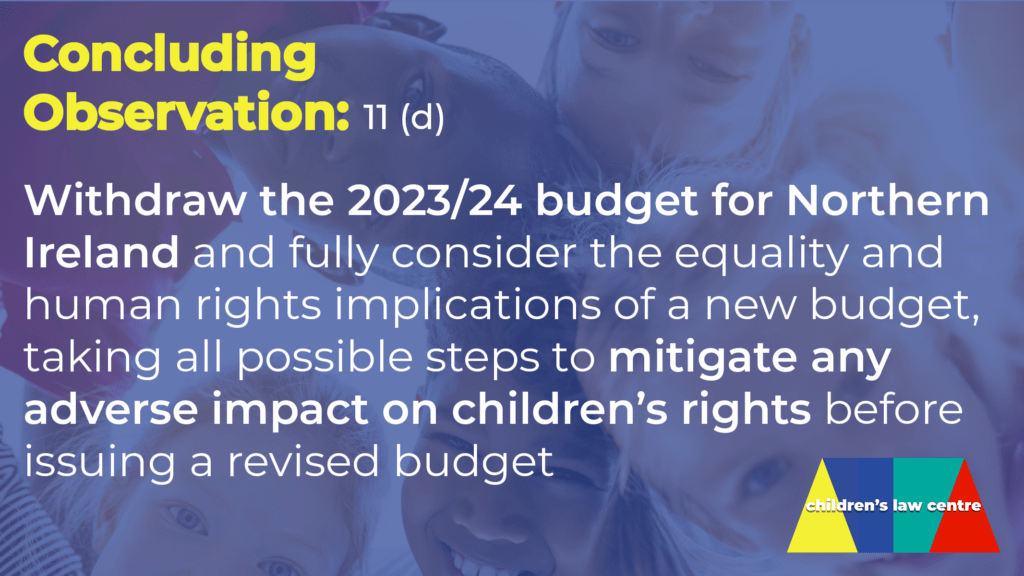
Concluding observations include wide range of recommendations including a call to scrap the NI budget and start again
The UN Committee on the Rights of the Child produced concluding observations following examination of the UK government and devolved regions.
The Children’s Law Centre has said the scale of non-compliance with human rights obligations is alarming and called for immediate action to implement the recommendations.
Fergal McFerran, Policy and Public Affairs Manager at the Children’s Law Centre said:
“This is a damning set of recommendations from the UN Committee on the Rights of the Child. It reflects the grim picture facing children and young people in this jurisdiction today. The gap in children’s rights has grown significantly over the last decade and children and young people are suffering every day because of it, whether that’s facing discrimination, failure to access services or simply not being allowed to have a say on decisions affecting them.
“We now need to see swift action to address the many failings identified throughout the examination process. There can be no excuses or delay. The scale of non-compliance with human rights obligations is alarming.
“Some major recommendations like raising the age of criminal responsibility, legislation to protect under 18s from age discrimination, and the introduction of a Bill of Rights for Northern Ireland have been outstanding for years and have now been included in successive concluding observations. Other recommendations like scrapping the Northern Ireland budget, ending PSNI strip-searches of children and ending the use of contingency accommodation for asylum seeking children are new and add to a growing list of children’s rights breaches.
“Children and young people are being seriously failed. The gap in children’s rights has dramatically increased over the last decade due to the lack of action. The situation has become even worse due to the attacks on human rights by the UK government, the collapse of local decision making, the impact of Brexit and the failure to properly resource services.”
Fergal McFerran continued:
“We carried out an extensive piece of work with sector experts and children and young people themselves to identify the issues in this jurisdiction. We’re reassured that the Committee has reflected that work in their recommendations. We thank them, and in particular their UK taskforce, for their diligent work.
“We would also like to thank everyone who took part in the research, including NGOs, Dr Deena Haydon, Jerome Finnegan from Save the Children and of course the children and young people who either told us their views or presented to Committee members themselves. Their work has had a direct impact on the outcome of the reporting process.
“We now owe it to them all to see major change.”
The Concluding Observations contains a wide range of recommendations. Other key recommendations cover issues such as the right to withdraw from religious worship in schools, relationship and sexuality education, restraint and seclusion, abortion, stop and search, plastic bullets, protecting children from paramilitaries, and ending the hostile environment for refugee and asylum seekers.
The Children’s Law Centre led the Northern Ireland NGO sector in reporting to the UN Committee, including the submission of three major reports and leading two delegations of experts and young people to present evidence to Committee members.
The Centre will now work to ensure the recommendations are implemented by those responsible.
Over 200 organisations and individuals write to Secretary of State for Northern Ireland calling for a reversal of recent budget decisions
Concern raised around potential breach of statutory duties and failure to assess the impact of decisions
We have now stopped accepting signatures and are updating the Secretary of State for Northern Ireland, Chris Heaton-Harris, with the final list of endorsements. Thank you to the 200+ who signed the letter. We will continue to work to protect children from harm
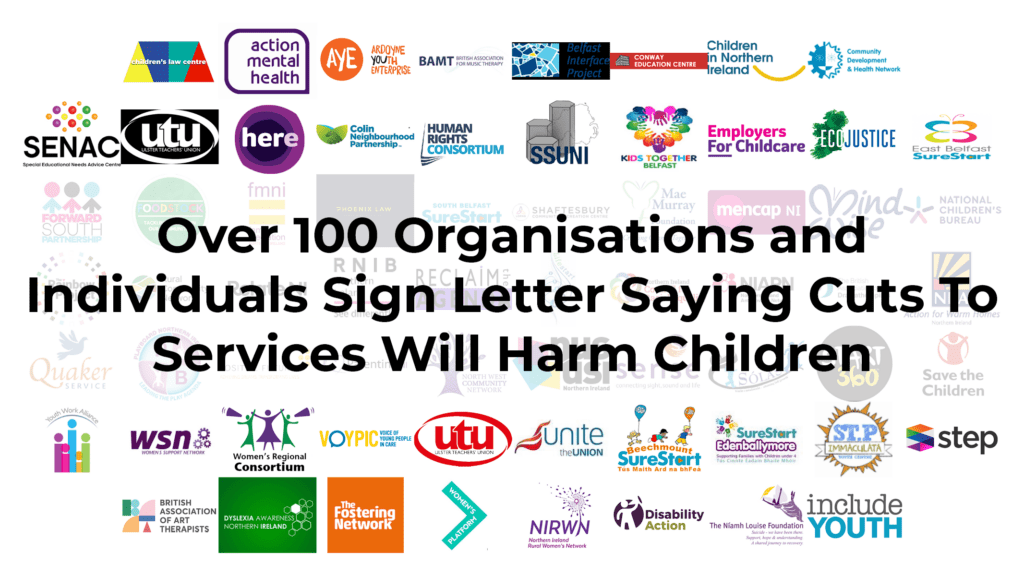
Over 200 organisations and individuals have jointly signed a letter written to the Secretary of State for Northern Ireland, Chris Heaton-Harris, raising concern around the impact of budget decisions and cuts to services. The letter urges the Secretary of State to reconsider the budget decisions and immediately assess the impact on children and young people.
After submitting the letter, Fergal McFerran, Policy and Public Affairs Manager at the Children’s Law Centre, said:
“The budget and the cuts to services flowing from it will cause active harm to a generation of children and young people. We have had weeks of announcements signalling cuts to children’s support and early intervention services that will cause significant long-term harm to many.
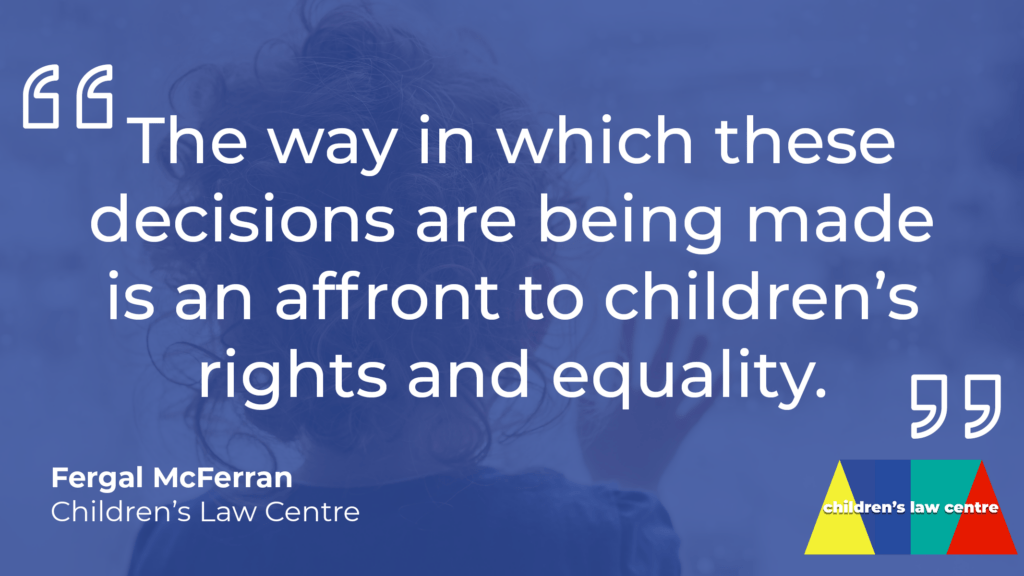
“The way in which these decisions are being made is an affront to children’s rights and equality. Despite having a statutory duty to assess the impact and to protect children, particularly children who are disadvantaged or have additional needs, these services are the first to go.
“Many children and young people, as well as their parents, guardians and carers, are already at breaking point. There is a crisis in mental health for our young people, a complete failure around services for children with special educational needs and disabilities, and unacceptable numbers of children living in poverty. Yet, budget decisions are targeting these groups of children directly.
“Rather than cutting children’s services, we must look at how we better protect our children and young people. We should be strengthening laws to ensure they have full access to services that support their survival and development. We should be making decisions that are in their best interests, rather than knowingly subjecting them to future harm.”
The full list of endorsements include:
Acrewood Daycare
Action For Children
Action Mental Health
Advice NI
Altram
An Droichead
Angel Eyes NI
ARC Healthy Living Centre Ltd
Ardoyne Youth Enterprise
BAAT (British Association of Art Therapists)
BACP (British Association of Counselling and Psychotherapy)
BADth (British Association of Dramatherapists)
BAMT (British Association for Music Therapy)
Barnardo’s NI
BASW NI (British Association of Social Workers Northern Ireland)
Beechmount Sure Start
Belfast City Council
Belfast Interface Project
Bishop Street Youth Club
Blackfort Adolescent Gestalt Institute
Bloomfield Community Association
Breda Academy
Cara-Friend
Carrickfergus Hub Improving Lives Locally (CHILL)
Chartered Institute of Housing
Cherish Sure Start
Children’s Law Centre
CiNI (Children in Northern Ireland)
Cliftonville Community Regeneration Forum
CO3 (Chief Officers 3rd Sector)
Colin Early Intervention Community
Colin Neighbourhood Partnership
Common Youth
Community Development & Health Network
Contact
Conway Education Centre
Corpus Christi Youth Centre
Creggan Youth Drop-in
Crumlin Ardoyne Neighbourhood Renewal Partnership
CyberSyd
Disability Action NI
Dyslexia Awareness NI
Early Years
East Belfast Sure Start
EastSide Learning
Ecojustice Ireland
Employers for Childcare
Enagh Youth Forum
Engage Project
Extern
Family Mediation NI
Focus The Identity Trust
Foodstock
Footprints Women’s Centre
Forward South Partnership
Foyle Down Syndrome Trust
Full Service Community Network
Giggles Early Years
Glenbrook Sure Start
Glen Community Parent Youth Group
Greater Shantallow Area Partnership
Greenway Women’s Centre
Harberton Special School and Outreach Services
Hazelwood Integrated College
HERe NI
Holy Family Youth Centre
Holy Trinity College
Holywell Trust
Human Rights Consortium
Include Youth
Ionad Uíbh Eachach
Kids Together Belfast
Lagmore Youth Project
Law Centre NI
Lifestart Foundation
Longtower Youth Club
LORAG (Lower Ormeau Residents Action Group)
Mae Murray Foundation
Matchbox Youth Club
Melted Parents NI
Mencap
Menstruation Matters Belfast
Mid and East Antrim Borough Council
Migrant Centre NI
MindWise
Mornington Community Project
NAHT NI (National Association of Head Teachers NI)
National Autistic Society NI
National Children’s Bureau
National Education Union
National Energy Action NI
NDCS (National Deaf Children’s Society)
Nexus
NI Council for Racial Equality
NICVA (Northern Ireland Council for Voluntary Action)
NI Rural Women’s Network
Niamh Louise Foundation
NIAPN (NI Anti-Poverty Network)
NIBPS (Northern Ireland Branch of the British Psychological Society)
NIPSA (Northern Ireland Public Service Alliance)
North West Community Network
Northwest Youth Services
Northern Ireland Women’s Budget Group
Northern Ireland Youth Forum
NUS-USI (Nation Union of Students – Union of Students in Ireland)
Our Streets Derry
Parent Action NI
Parenting NI
Parkview Special School
Phoenix Law
Playtime Day Nursery Eskra
Playboard
Poleglass Community Association at Sally Gardens
Positive Futures
PPR (Participation and Practice of Rights)
Quaker Service
Queen’s Students’ Union
Rainbow Child and Family Centre
Reclaim the Agenda
Relate NI
Relatives for Justice
Relax Kids Belfast
RNIB NI (Royal National Institute of Blind People)
Rural Community Network
Saól Úr Sure Start
Save the Children NI
SENAC (Special Educational Needs Advice Centre)
Sense NI
Shimna Integrated College
Simon Community
Sleepy Hollow Group
Sólás Special Needs Charity
South Belfast Sure Start
SSUNI (Secondary Students’ Union NI)
St. Mary’s Christian Brothers’ Grammar School
St. Mary’s Limavady
St. Mary’s Youth Club, Creggan
St. Peters Immaculata Youth Centre
St. Ronan’s Primary School Newry
Start360
STEP (South Tyrone Empowerment Programme)
Surestart Edenballymore
Sustrans
The Bytes Project
The Fostering Network
The Larder Belfast
The Rainbow Project
Trussell Trust
UNISON
Unite the Union
UTU (Ulster Teachers’ Union)
Voice of Young People in Care (VOYPIC)
West Belfast Partnership Board
WheelWorks Arts
Whiterock Children’s Centre
Women’s Regional Consortium
Women’s Resource and Development Agency
Women’s Support Network
Women’s Aid Federation Northern Ireland
Women’s Platform
Youth Engagement Service
Young Enterprise NI
Youth Work Alliance
Youth Action NI
Youth Empowerment And Resilience (YEAR) Project
Youth First Youth Club
Youth Initiatives
Adrian Walsh, Principal, St. Colm’s High School, Belfast
Alan Law, Chairperson – Education Trade Union Group – NIC-ICTU
Ciaran White BL
Deborah Erwin, Youth Engagement Consultant
Deirdre McAliskey, A Way With Words
Deirdre Shakespeare, Harry’s Law
Dr Bronagh Byrne, Senior Lectuer in Social Policy, Queen’s University People
Dr Ciara Fitzpatrick, Ulster University
Dr Deena Haydon
Dr Dominic McSherry, Reader in Psychology, Ulster University
Dr Fiona Bloomer, Senior Lecturer, Ulster University
Dr Gillian Kane, Lecturer in Law, Ulster University
Dr Karen Hagan, Open University
Dr Karen Orr, Stranmillis University College
Dr Liam O’Hare, Queen’s University Belfast
Dr Lucy Royal-Dawson, Ulster University
Dr Raied Al-Wazzan
Dr Siobhán McAlister, Senior Lecturer in Criminology, Queen’s University, Belfast
Dr Suzanne Mooney, Senior Lecturer in Social Work, Queen’s University Belfast
Dr Una Convery, Lecturer in Criminology, Ulster University
Emmet McAleer, Independent Councillor
Goretti Horgan, Senior Lecturer in Social Policy, Ulster University
Jackie Redpath, Greater Shankhill Partnership
Katrina Crilly, Principal, St. Patrick’s College, Maghera
Koulla Yiasouma, Former NI Commissioner for Children and Young People
Madeleine Leonard, Professor Emeritus, School of Social Sciences, Education and Social Work, Queen’s University, Belfast
Phil Scraton, Professor Emeritus, School of Law, Queen’s University, Belfast
Professor Andrew Percy, Queen’s University Belfast
Professor Anne-Marie McAlinden, Queen’s University Belfast
Professor Colin Harvey, Queen’s University Belfast
Professor Laura Lundy, Queen’s University Belfast
Professor Rory O’Connell, Ulster University
Professor Victoria Simms, Professor of Developmental Psychology, Ulster University
Sinead Kyle BL
This includes requiring each country, every five years or so, to make a report on their progress to an international committee of experts on children’s rights (this is called: ‘The United Nations Committee on the Rights of the Child’). This Committee will then visit those countries to check if they are doing what they should be for children and let them know where they need to improve.
People should think about ways to make sure everyone knows about the Convention, regardless of their age. There should be training around how to do this, especially for those who work with children and young people.
Countries are free to give children and young people more rights than the Convention lists; they just can’t take away the rights that are given by it.
the government should always try to make sure that your rights:
are realised in practice
actively help you to live a safer and happier life
It also means that the government should take steps so that you and the adults who work with children and young people all know about the UNCRC.
The age of criminal responsibility in Northern Ireland is 10, however the UN Committee on the Rights of the Child say that this is too low and have asked our government to raise the age of criminal responsibility to at least 14 years old.
The government must do all that they can to protect you and look for your family so they can reunite you. If your family cannot be found, the government must provide you with the same support and protection as any other child that has been separated from their family.
This includes being taken from where you live against your will and forced to live somewhere else.
It is your right to learn and practice your language, customs and religion. The government must do all that they can to support you and make sure you do not face unfair treatment or discrimination as a result of this.
Our government should make sure you can participate in fun activities you like e.g. places to meet and socialise with friends, sports, youth clubs and cinemas. You should also have opportunities to enjoy cultural life and customs for instance taking part in special events and activities.
The government should;
Make sure primary education is compulsory and free
Develop different types of secondary education, for example vocational training, and offer accessible guidance to all young people on their options
Offer financial support for young people who cannot afford further education
Work to reduce dropout rates from school
Make sure all school disciplines are appropriate, for example teachers should not use violence or harm children or young people
Your education should:
Respect human rights and freedoms
Respect the environment
Respect your family, identity, language, your values and the values of communities different than your own
Prepare you for life when you leave school for example understanding, peace, tolerance, equality and friendship with people of all backgrounds
The government should help your parents/guardians to provide for you. This includes supporting you, or a parent/guardian on your behalf, to make a claim for social security benefits, offering support and training, clothing, food and housing.
This support and training should also include teaching you about the effects of drug use and the government should protect you from any harm you might suffer if your parents/guardians are using drugs.
You have the right to clean water and nutritious food so that you can stay healthy. You should also be taught about nutrition, hygiene and how to keep yourself safe.
The government should make sure you have access to education, training, health care services, rehabilitation service, preparation for employment and recreation opportunities necessary for your development, especially if you have a disability.
The government should do as much as they can to make sure you grow up happy, healthy and safe.
This includes providing you with child-care or other arrangements if your parents/guardians are working.
If you are living in conflict, it may be in your best interests to place you in a different country.
Your other rights must still be met, for example keeping in contact with your parents where it is safe to do so.
Some examples of being in the care of the government are when you are living in;
care homes
foster care
hospitals
residential schools
boarding schools
prisons
detention centres
rehabilitation centres
If it has been decided that the best option for you is alternative care (e.g. foster care, a children’s home or being adopted),
there should be independent checks to make sure that your rights are respected.
You have the right to keep in contact with your family if they are living in a different country, and to leave your country to live with your family, where possible.
Applications to reunite a family involving children can be made by children who are outside the UK,
to join their parent(s) with leave to remain in the UK, subject to meeting requirements set out in the Immigration Rules.
Being kidnapped also includes being taken from where you live against your will and forced to live somewhere else, e.g. being sent to a different country against your will.
The government must understand that your parents and family are important people in your life.
The government must also see that, generally, as you get older and more mature you should have even more say in these types of decisions.
For example;
If your parent is in prison you have a right to visit them if you want to, so long as this is in your best interests.
If you are in care, your parents may still be involved in decisions affecting your life. They should be helped to do this in a way that respects your rights and is in your best interests.
This includes help for survivors of:
violence
sexual violence
neglect
exploitation of any kind
abuse
torture
armed conflict
trafficking
This also applies to young people who are suspected of having breached immigration laws, such as asylum seekers and refugees.
You should be protected from anyone doing anything to your body that you do not want them to do, this includes physical punishment in school or for someone to touch you, to take inappropriate pictures of you, or to use images of you in a negative or inappropriate way.
Some types of harm include physical or mental violence, injury or abuse, neglect, maltreatment or exploitation. There are also traditional practices in some cultures which can cause harm to children, such as forced marriage, food restrictions, scarring/branding and other body modifications.
The government must help to make sure that people are never violent or harmful towards you and they should take steps to prevent you from harming yourself in any way.
You are free to join a peaceful protest about issues you feel strongly about e.g. climate change and your privacy should be respected when doing this, but you don’t have a right to meet others for unlawful purposes e.g. to cause harm to other people.
Some young people living in places like residential homes, juvenile justice centres or hospitals, may find it difficult to have their own space. Regardless of where you are living, you have a right to privacy.
Everyone should have access to the media and the internet, including young people whose freedoms are limited e.g. those in the Juvenile Justice Centre. Young people with a disability or where English is not their first language should get the help they need to access the media. You should be protected from harmful media for example material that shows graphic violence.
You can express yourself in different ways such as talking out loud or posting things on the internet. Your parents/guardians can guide you in this but as you get older and more mature, your ability to hold beliefs that are different from others must be respected.
For example, if your religion/beliefs are different from other students at your school, your teachers should make sure you have the chance to practice your religion and customs during school hours, if you want to. You should be able to follow your own beliefs as long as these beliefs respect and don’t cause harm to others e.g. you don’t have the right to reveal private information or say harmful things about a person that are not true.
Your identity is made up of many different parts, including:
Your name and nationality
Your race, culture, religion and language
Your appearance, abilities, gender identity and sexual orientation
The government should not interfere with your right to any of these and they should be able to help if any of these things are taken away from you.
For example;
Children in care – This means that your name should not be changed, unless you want it to be.
Stateless children – being stateless can affect whether you can go to school or to the hospital. The government should not have any laws that discriminate on the basis of ethnicity, race, religion or gender to cause statelessness.
If you are in care you have a right to have a say in where you are going to live. If you are in a hospital you have a right to have a say when there are different treatment options available to you. As you get older and more mature you should have even more say in these types of decisions.
The government should do as much as they can to make sure you grow up happy, healthy and safe.
This means all adults, like your parents/guardians, teachers, social workers, doctors and the police. When adults make decisions that will affect your life they must always think about what’s best for you and make sure you have a say in these decisions, where possible.
Discrimination can be direct or indirect. For example;
Direct: If someone did not get a job because they had a disability or a different skin colour.
Indirect: If everyone had to climb up a flight of stairs to get to an after-school club, this would discriminate against children who couldn’t do that because of a physical disability.
Youth Participation and Advocacy
Youth Participation and Advocacy Project
The work of the Children’s Law Centre is guided and informed by the views of children and young people, particularly youth@CLC, our youth advisory panel.
Youth@CLC work closely with our Youth Participation and Advocacy Worker and other youth forums/young people in schools to raise awareness of children’s rights issues in Northern Ireland and advocate for positive change in children’s lives using children’s rights.
Youth@CLC inform our work and government policy affecting children through:
Participation in consultation responses
Running children’s rights projects and campaigns
Policy Work
Policy Work in CLC
CLC’s policy work ensures that where proposed governmental policies or legislation will impact on children and young people, government is reminded of its obligations to deliver on children’s rights as it is set out in the United Nations Convention on the Rights of the Child.
Some of the policy work we do includes:
Making consultation responses
Providing policy briefings to decision makers, partner organisations, children and young people and the general public
Delivering policy training
Making written and oral submissions to NI Assembly Committees
Carrying out consultations with children and young people and representing the views of children and young people to government
Legal Services
Our values
Our legal services are child focussed and the child is always our client.
We ensure that public authorities, tribunals and courts recognise children as rights holders with the right to express their views and have those views taken into account.
We strive to ensure that when decisions are being made that impact on the lives of children we represent…
The voice of the child is always heard ,
The child’s best interests are at the heart of decision-making
All children have equality of access to their legal rights, regardless of their age, background or circumstances
Chalky – Free phone Advice Line 0808 808 5678…(phone and email icon and address)
Our CHALKY legal advice and information service was launched in May 2000. We provide a free child friendly legal advice and information service, which deals with over 2000 issues annually. Our service provides free advice by phone or email to children and young people, their parents/carers and professionals with legal queries relating to difficulties in school, access to services for disabled children, special educational needs, mental health service provision, homelessness, family law issues and other general legal queries.
We can provide advice on children’s rights relating to the following areas:
Family Law
Being Looked After
Youth Justice
Mental Health Law
Access to Medical Services
Access to Family Support Services
School Admissions
Suspensions and Expulsions
Special Educational Needs
Social Security Benefits
Employment
Leaving home
The Human Rights Act
Equality and Discrimination
Housing
Immigration
Do you know you Rights series link here
Free Legal Representation for Children and Young People
We also provide free legal representation, particularly at SENDIST and Mental Health Review Tribunals and undertake strategic litigation following the criteria contained within our Casework Policy.(link to)
Some stats here
New Digital Information and Advice Service for Children and Young People only (under 18)– Live Now!
Ree Rights Responder and Live Chat
Young people (aged 13 – 17) who would prefer to access information on their rights online can access our Children’s Rights chatbot REE- Rights Responder, which also offers a connection to an online legal advisor through REE live Chat for those young people who may need additional information and advice on their rights. See Ask an Expert in Youth Section for more information on REE.
Training
Training
Due to the current Covid 19 Public Health Emergency all CLC’s face to face Training Calendar Events are postponed until further notice. We are hoping to offer online training seminars in the near future. Dates for online events and booking details will be posted to this page in due course…
The provision of training and information events are integral to the work of the Children’s Law Centre. All training delivered by CLC is directly informed by legal, policy and legislative developments relevant to children and young people and is underpinned by the key principles of the United Nations Convention on the Rights of the Child, ratified by the UK Government in 1991:
Article 2 – Non discrimination
Article 3 – Best Interests of the Child
Article 12 – Voice of the Child
CLC training aims to support all stakeholders in making children’s rights a reality in this jurisdiction by:
Raising awareness and understanding of children’s rights
Promoting the protection and mainstreaming of children’s rights
Links to online booking feature for future use?
Children’s Law Centre Service during Covid-19 Health crisis
We are not receiving post at present, all communication to be sent by email.
As a result of the current health crisis, and in accordance with government advice, all Children’s Law Centre staff are now working from home. We will continue to deliver services to the best of our ability and within ongoing restrictions.
What about Children’s Human Rights during the COVID-19 Pandemic?
The United Nations Committee on the Rights of the Child recently set out that “…restrictions must be imposed only when necessary, be proportionate and kept to an absolute minimum” and that “States should respect the right of every child to non-discrimination in its measures to address the COVID-19 pandemic as well as take targeted measures to protect children in vulnerable situations…States should ensure that responses to the pandemic, including restrictions and decisions on allocation of resources, reflect the principle of the best interests of the child.”
For answers to your legal FAQs on how COVID-19 impacts on children’s rights click here>>>
Brief note on children and the Mental Capacity Act (NI) 2016 and temporary changes to Deprivation of Liberty Safeguards during COVID-19 emergency, click here>>>
If you are concerned about how COVID-19 may impact on children’s enjoyment of their legal rights and you require further legal advice please email: info@childrenslawcentre.org
You may contact individual Children’s Law Centre staff via email. Please initially contact Sarah McAuley on reception@childrenslawcentre.org
If you have already been in contact with a member of staff please contact the relevant member of staff directly.
Email addresses for Children’s Law Centre staff are below:
reception@childrenslawcentre.org
sarahmcauley@childrenslawcentre.org
barbaramuldoon@childrenslawcentre.org
catherine@childrenslawcentre.org
claire@childrenslawcentre.org
dianehammond@childrenslawcentre.org
eamonnmcnally@childrenslawcentre.org
samnelson@childrenslawcentre.org
emmaroseduffy@childrenslawcentre.org
helenrafferty@childrenslawcentre.org
kathrynstevenson@childrenslawcentre.org
liammackle@childrenslawcentre.org
mariamccloskey@childrenslawcentre.org
paddykelly@childrenslawcentre.org
rachelhogan@childrenslawcentre.org
Sinead@childrenslawcentre.org
If you wish to contact our legal advice service you may continue to do so by emailing: info@childrenslawcentre.org
Please note that CHALKY our Free Phone Advice Line has been suspended until further notice.
We will continue to monitor government advice and hope to be able to return to a full service as soon as it is safe to do so.
Please stay safe and well.
Children’s Law Centre Management Committee and Staff